The repeatable family beach day, from flag check to bonfire
A 30A beach day with kids runs on four parts: read the fire district's flag before anyone dresses, swim mornings near one of the two regional accesses the county lists lifeguards for, keep a dune lake in your pocket for loud-Gulf days, and end early enough that golden hour is a treat instead of a meltdown. Nights that call for a bonfire need a fire district permit, and the whole system fits on an index card.
What makes this list, printed as always: every item is a system rather than a spot. It has to work any week of the year, name the authority that runs it, and survive contact with a cranky three-year-old. Nothing here is sponsored and nothing is invented; where a detail is not in our sources, we tell you to check locally instead of pretending.
Part one: the flag ritual
The South Walton Fire District flies five beach flag colors: green for low hazard, yellow for medium, red for high, double red when the water is closed to the public, and purple for dangerous marine life, which can fly alongside another flag. The family version: your kid is the flag reporter, the color gets announced before sunscreen, and the color sets the plan without negotiation. Red means a sand day. Double red means the Gulf is closed and the backup plan runs. The full teaching guide turns it into a game kids genuinely play.
Part two: the two accesses we plan around
The county maps more than 50 beach and bay accesses, including 11 regional beach accesses with parking, restrooms, showers, and bike racks. Two carry the detail that matters most with small swimmers: county listings name seasonal lifeguards at the Blue Mountain Beach Regional Beach Access, in the corridor's quiet middle, and at the Inlet Beach regional access, the area's largest, with its boardwalk and accessible parking. Set up near the chair when it is staffed, introduce your kids to the guard, and keep your own watch anyway. Between accesses, treat the coast as unguarded, because it is.
Part three: the dune lakes, your calm-water backup
When the Gulf is loud, the rare coastal dune lakes are usually glass: this lake type occurs only in New Zealand, Australia, Madagascar, Oregon, South Carolina, and here in Northwest Florida. Western Lake inside Grayton Beach State Park is the classic family paddle, and Camp Helen State Park on Inlet Beach's eastern border is a 180 acre day-use park on Lake Powell, Florida's largest coastal dune lake at roughly 800 acres. Both are state-park entry, details on each park's official site. The lakes sit outside the flag-and-lifeguard system, so they are wild water: life jackets on paddlers, littles at the edges, and flowing outfall channels treated as no-play zones. The honest trade is more supervision for much calmer water, and with toddlers it is usually a great trade.
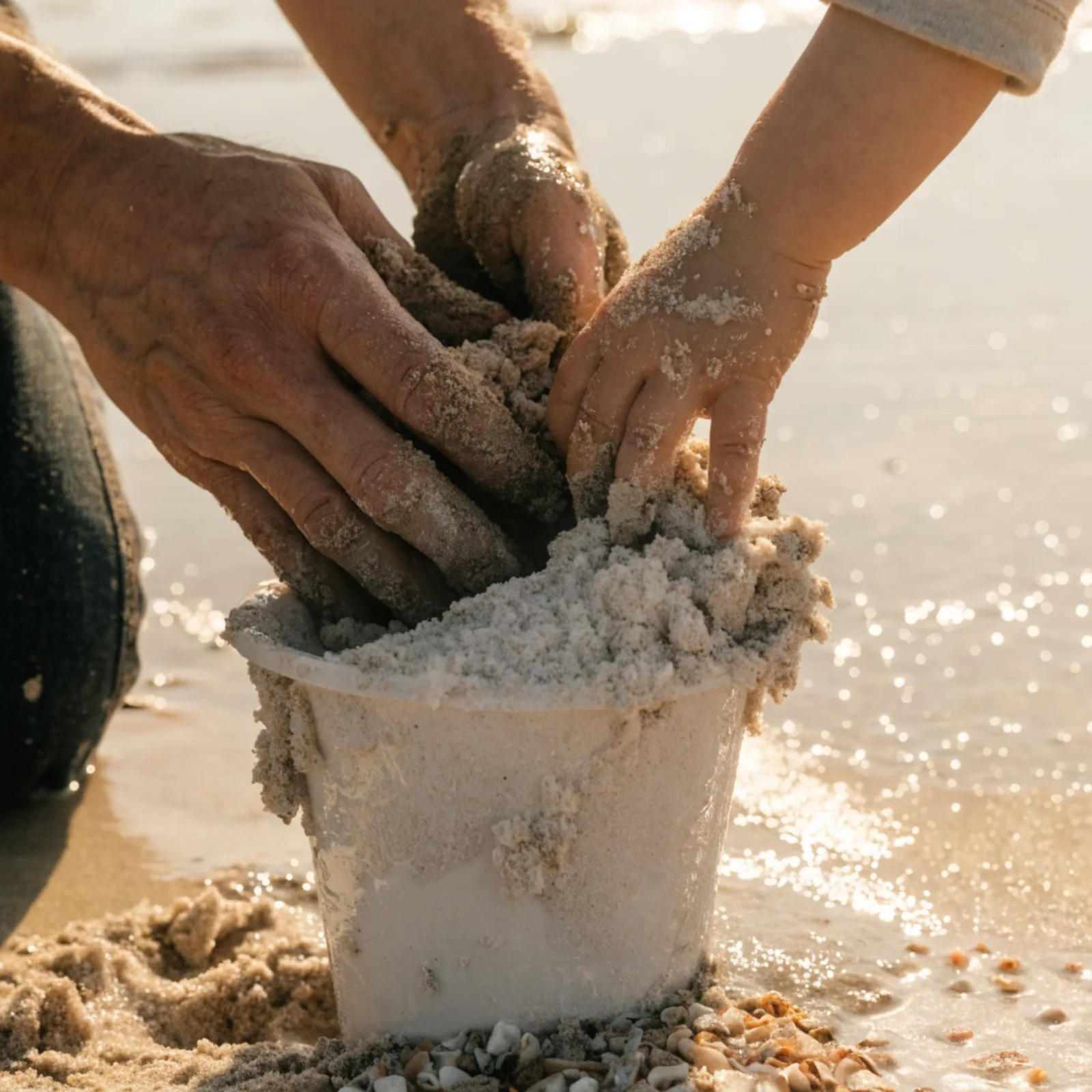
Part four: timing, seasons, and the golden-hour encore
The family window is the morning: cooler sand, kinder light, easier parking, and a nap afterward that pays for the whole operation. Peak summer runs June through August and rewards early starts most; March brings spring break energy; September and October are the warm shoulder where the Gulf stays swimmable and the towns exhale; January and February belong to snowbirds and beach walks in sweatshirts. Whatever the month, the encore is golden hour: back to the sand after dinner when the light is soft and the crowds are gone. Kids remember golden hour.
Part five: bonfire nights, done legally
A beach bonfire with kids is a genuine 30A memory, and it is a permitted activity: permits are issued through the South Walton Fire District at $100 ($105 by card), the permit holder must be 18 or older and present, and the standard permit covers gatherings of fewer than 30 people; 30 or more also requires a Walton County outdoor special event permit. Approved containers top out at 4 feet, and ashes get doused and removed. Book the permit before you promise the marshmallows, and the night goes exactly the way the promise sounded.
Quick questions
What is the best beach routine with kids on 30A?
Flag check first, then a morning session near a staffed access, big lunch, real nap, and a golden-hour return. It survives toddlers, teens, and grandparents, which is why it is the backbone of this site.
What happens on a double red flag day?
The water is closed, everywhere, no judgment calls. The sand stays pleasant and the rest of the county still works: dune lakes, bookstores, art studios, and long breakfasts. Our planner builds that day for you.
Can families have a beach bonfire on 30A?
Yes, with a permit issued through the South Walton Fire District: $100 ($105 by card), the permit holder must be 18 or older and present, and the standard permit covers gatherings of fewer than 30 people. Thirty or more also needs a county special event permit.